
5 one-hour-long lessons:
-
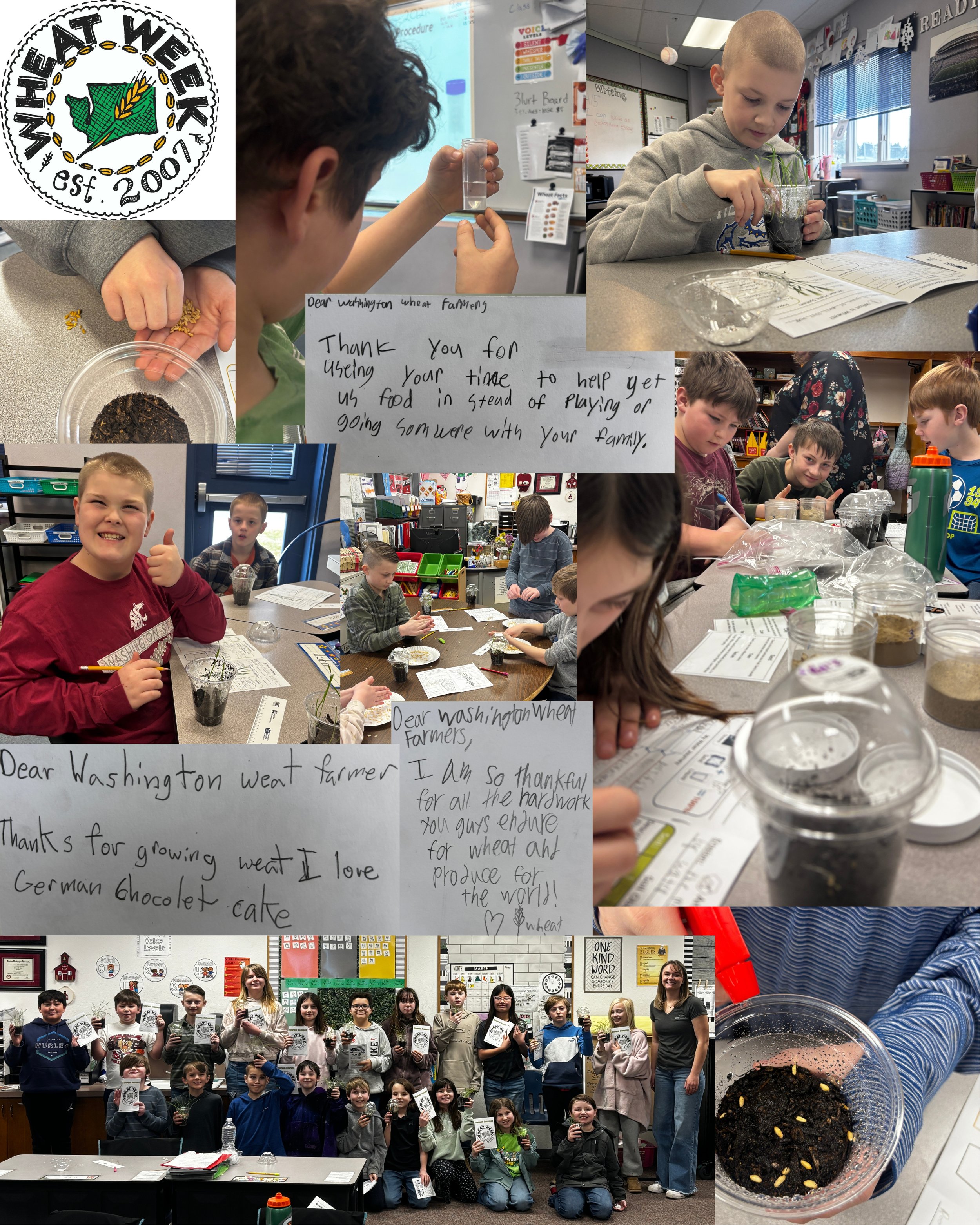
Students explore the wheat plant as a system of parts while discussing implication of inputs and outputs to the system and how that affects the plant. Learn what makes wheat grow as students create their own wheat terrariums to observe throughout the week.
-
Students explore the water cycle, including precipitation, evaporation, condensation and collection through classroom participation. Students model the water cycle as they play a game and travel to various locations as a drop of water.
-
Students differentiate between the three soil textures (sand, silt and clay) based on particle size and permeability through a hands-on demonstration. Students discover how soil is made and discuss the properties of soil and their importance to farmers and community members.
-
Students earn about the important contributions Norman Borlaug had on feeding the world in the 1970's. Students explore wheat classes, plant breeding, and DNA through a wheat germ DNA extraction.
-
Students thresh a wheat plant to discover its energy source for humans and how it is transferred to us. Students wrap up their wheat terrarium observations and find out how to take care of their wheat at home.